The HulkFan
Hulk Characters
This section is about the Hulk characters.
The Main Characters
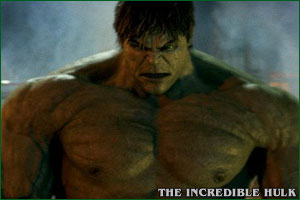
Bruce Banner The core of the Hulk, Bruce Banner has been portrayed differently by different writers, but common themes persist. Banner is a genius but emotionally withdrawn in most fashions. Banner designed the gamma bomb which causes his affliction, and the ironic twist of his self-inflicted fate has been one of the most persistent common themes. Arie Kaplan describes the character thus: "Bruce Banner lives in a constant state of panic, always wary that the monster inside him will erupt, and therefore he can't form meaningful bonds with anyone."
Throughout the Hulk's published history, writers have continued to frame Bruce Banner in these themes. Under different writers, his fractured personality led to transformations into different versions of the Hulk. These transformations are usually involuntary, and often writers have tied the transformation to emotional triggers, such as rage and fear. As the series has progressed, different writers have adapted the Hulk, changing Hulk's personality to reflect changes in Banner's physiology or psyche. Writers have also refined and changed some aspects Banner's personality, showing him as emotionally repressed, but capable of deep love for Betty Ross, and for solving problems posed to him. Under the writing of Paul Jenkins, Banner was shown to be a capable fugitive, applying deductive reasoning and observation to figure out the events transpiring around him. When Banner has controlled the Hulk's body, he has applied principles of physics to problems and challenges and used deductive reasoning.
The Hulk During the experimental detonation of a gamma bomb, scientist Bruce Banner rushes to save a teenager who has driven onto the testing field. Pushing the teen, Rick Jones, into a trench, Banner himself is caught in the blast, absorbing massive amounts of radiation. He awakens later in an infirmary, seeming relatively unscathed, but that night transforms into a lumbering grey form that breaks through the wall and escapes. A soldier in the ensuing search party dubs the otherwise unidentified creature a "hulk".
The original version of the Hulk was often shown as simple and quick to anger. His first transformations were triggered by sundown, and his return to Banner by dawn; later, emotions triggered the change. Although grey in his debut, difficulties for the printer led to a change in his color to green. In the origin tale, the Hulk divorces his identity from Banner's, decrying Banner as "that puny weakling in the picture".[16] From his earliest stories, the Hulk has been concerned with finding sanctuary and quiet,[3] and often is shown reacting emotionally to situations quickly. Grest and Weinberg call Hulk the "...dark, primordial side of [Banner's] psyche.". Even in the earliest appearances, Hulk spoke in the third person. The Hulk retains a modest intelligence, thinking and talking in full sentences, and Lee even gives the Hulk expository dialogue in issue six, allowing readers to learn just what capabilities the Hulk has, when the Hulk says, "But these muscles ain't just for show! All I gotta do is spring up and just keep goin'!" In Marvel: Five Fabulous Decades of the World's Greatest Comics, Les Daniels addresses the Hulk as an embodiment of cultural fears of radiation and nuclear science. He quotes Jack Kirby thus: "As long as we're experimenting with radioactivity there's no telling what may happen, or how much our advancements may cost us." Daniels continues "The Hulk became Marvel's most disturbing embodiment of the perils inherent in the atomic age."