So the big question some of you may have is: what is Project: The Lost Anime Fansite Archive?
About a year ago, completely out of the blue, I was browsing MajinPlanet on the Wayback Machine. I was digging through old content, looking for things to repost to the site. While doing that, I started asking myself: what happened to all those old anime sites from back in the day?
A little history of the era
 From roughly 2001 to late 2010, the online anime community was full of fan sites. In the early 2000s, most were about Dragon Ball. Later, Naruto and Bleach dominated. Funny enough, even though One Piece was popular, I personally saw far more Naruto and Bleach sites during that time. The biggest of them all was NarutoFan.
Back then, most websites used what I like to call “copy-paste information.” It was so widespread that if those sites existed today, people would probably call it AI slop. There were some real gems out there, sites that put genuine care and effort into writing quality content; but for the most part, if you ran a Dragon Ball fan site, the core information was going to be the same everywhere. Character bios, episode guides, power levels, it was all recycled.
What really made a site stand out wasn’t the basic information. It was what you offered beyond that.
What made you different
Let’s get Majin Planet out of the way first. It became known for music videos. NarutoFan became known for downloads. Planet Namek was known for having a massive media library of images and being one of the first sites to host Dragon Ball clips and even full subbed episodes. In the early 2000s, most of us had only seen the English dub on TV, so that was a big deal.
For many, however, it became a money-making scheme. Webmasters would upload full RAW episodes or fansubs and charge $5 a month for access, claiming it was to cover hosting and server costs. In fairness, bandwidth was expensive back then, and for many webmasters, that explanation was legitimate. Most of those sites didn’t last a year because they never generated enough paying members to offset the costs.
NarutoFan was one of the early giants in that space. They were controversial, they were aggressive, and for a while they ruled that corner of the internet; until they didn’t. By early to mid-2010, as streaming began to rise, the days of downloading anime started to fade. Streaming was easier for users and cheaper to host.
The project’s goals
While browsing those old sites, I thought it might be interesting to acquire some of those domains. The first idea was simple: someone might remember an old site, type it into their browser, and instead of landing on a spam-filled parking page or nothing at all; they would find something meaningful.
Most of those sites were abandoned. The domains lapsed. Some were picked up by ad farms. Others simply died.
In mid-2025, I started buying them. You would be surprised how inexpensive many were. Some cost a few hundred dollars. Some are still owned. At first, I only planned to create small landing pages for my own former projects or sites directly connected to Majin Planet. Then I came across a few sites I used to work for.
Back in the day, I worked online creating layouts. Clients would send me PSD files, and I would slice them up and code the HTML pages. Many of those sites were startup membership projects. As mentioned earlier, most lasted only a few months before costs caught up to them. I never worried about that. I got paid for the design work. Some owners invited me to stay on as staff or coder. Payment wasn’t always involved; it was more about exposure and reputation within the community.
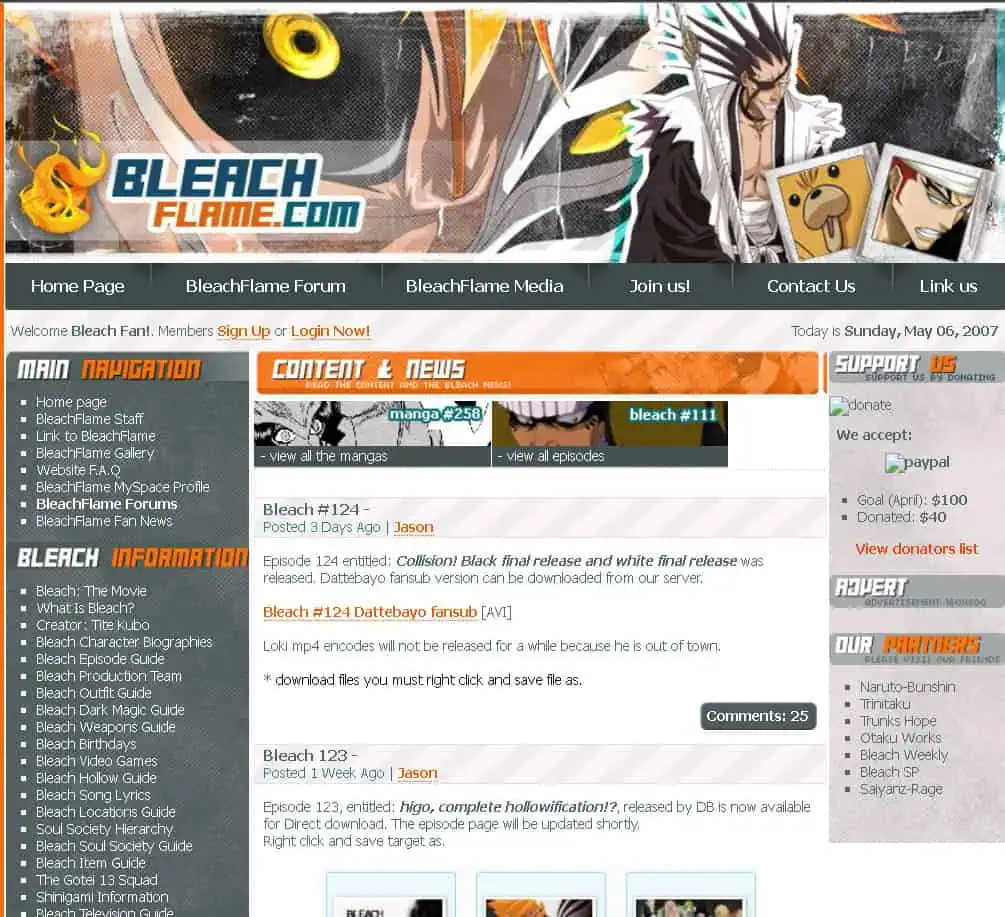 Ironically, that path is what led me to Majin Planet. I started as a forum moderator in 2004. I got to know Prince Majin Trunks. My work within the anime community eventually led to me taking over Majin Planet in 2005.
So what is the goal of this project?
It is not to fully restore these sites.
It is to preserve them.
The vision is to create landing pages that document their history: a small gallery, archived screenshots, context about what made them unique, and links to preserved pages on the Wayback Machine. It is about reconnecting people; now in their late 30s and 40s. To a lost era of the internet.
This was Web 1.0. The wild west. A time when any 16-year-old could buy a domain, set up hosting on HostGator, and try to make money selling anime memberships.
What’s even more interesting is that some of those pirate sites evolved into legitimate platforms. Many people forget that Crunchyroll started as an unofficial download to streaming site before shifting in 2009 toward legal licensing agreements. In some ways, nearly all of us were operating in gray areas back then. NarutoFan certainly was. Most of us were, to some degree.
But this project is not about glorifying piracy.
It is about documenting history.
It is about preserving a digital era that shaped an entire generation of anime fans.
If someone happens to find an old bookmark on a forgotten computer and types in that domain, there is a chance they will now land here. Not because I am building a backlink network or chasing traffic, but because I am telling a story. Backlinks may happen; that is how the web works; but they are not the purpose.
If you owned a website between 1999 and 2010 and your site has not been archived here; or even if it has and you would like to update information or do an interview. I would love to hear from you. Some sites I have more information on than others. This is an ongoing project that will likely take years. Given how many sites existed during that era, I may never truly finish.
My current focus is on domains I personally own. NarutoFan is a special case. I documented it already, but I will never own that domain. It is currently owned by VIZ Media.
And that, in many ways, is exactly why this project matters.